About Course
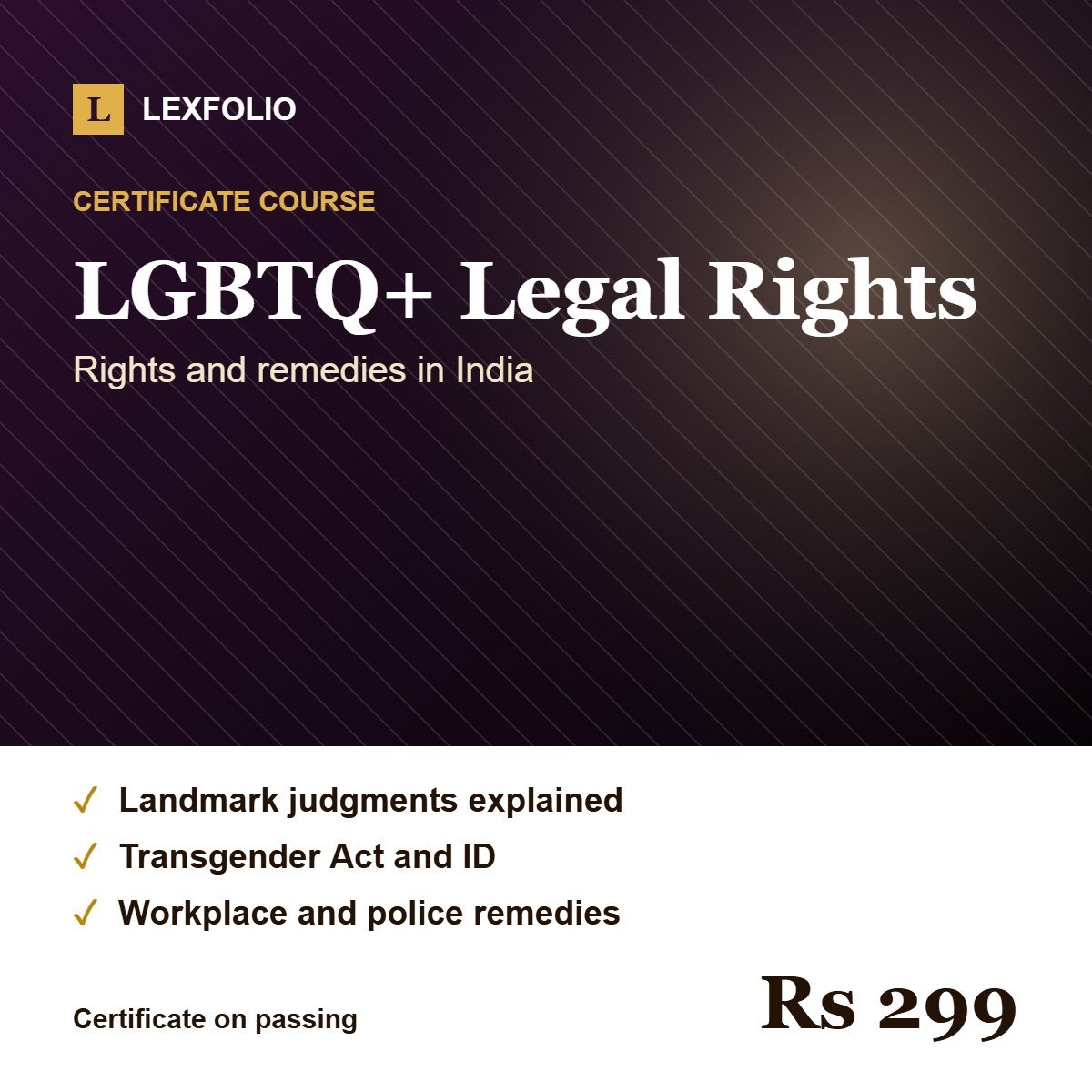
This course explains, in plain language, the legal rights of lesbian, gay, bisexual, transgender, queer and intersex persons in India as the law stands today. It is built for people who are not lawyers: LGBTQ+ persons and their families, human resources and diversity teams, counsellors, students and anyone who wants a clear and respectful account of the law.
It solves a common problem. The rules are spread across the Constitution, a string of Supreme Court judgments, a dedicated statute for transgender persons, and the new criminal code, and they keep changing. Most people do not know where a right comes from, what a famous judgment actually decided, or what to do when a right is denied. This course gathers the essentials in one place and turns them into practical steps.
The six modules move from foundations to action. Module one covers the constitutional base, Articles 14, 15, 19 and 21 and the right to privacy. Module two explains the landmark judgments: NALSA on gender identity, Navtej on Section 377, and the shift to the new criminal code. Module three deals with marriage, the Supriyo judgment and protection from family coercion. Module four covers the transgender law, the certificate process and the 2026 amendment. Module five addresses work, housing, services and healthcare. Module six covers police remedies, wills and nominations and a practical toolkit.
The format is self paced and simple. There are 6 modules, 18 lessons, 6 module quizzes and a 30 question final test, with a pass mark of 60 percent and 3 attempts. On passing you receive a certificate, verifiable at lexfolio.in/verify-certificate/, and you keep lifetime access to the material.
What you will learn
- How Articles 14, 15, 19 and 21 and privacy protect equality, expression, dignity and choice.
- What NALSA, Navtej, Puttaswamy and Supriyo decided, and what they left open.
- Where the new criminal code stands on Section 377 and the gap it created.
- How a transgender person obtains a certificate of identity and updates records.
- What the 2026 amendment to the transgender law changed.
- How to assert rights at work, in housing, in services and in healthcare.
- How to respond to police harassment and climb the ladder of remedies.
- How wills, nominations and powers of attorney protect a partner.
Who this course is for
- LGBTQ+ persons who want to understand and assert their rights.
- Families and friends who want to support a loved one with accurate information.
- Human resources and diversity teams building inclusive workplaces.
- Counsellors, social workers and student volunteers.
- Students and general readers who want a clear grounding in the law.
Lexfolio is an independent education platform and is not affiliated with any court, government department or regulator. This course is general legal information, not legal advice.
Course Content
Constitutional foundations
Equality and non discrimination: Articles 14 and 15
Expression, liberty and dignity: Articles 19 and 21
Privacy and identity: the Puttaswamy judgment
Module 1 quiz: constitutional foundations
The landmark judgments
Marriage, relationships and family
Transgender recognition and welfare
Everyday rights: work, housing, health
Dealing with the system
Final Assessment and Certificate
Student Ratings & Reviews

No Review Yet