About Course
When the police are involved, the questions come fast and the answers are hard to find. How do I get an FIR registered? What do I do when the station says it is not their area? A notice has come from the police, does that mean arrest? Which court do I go to for bail, and what will the court want? This pack answers those questions directly.
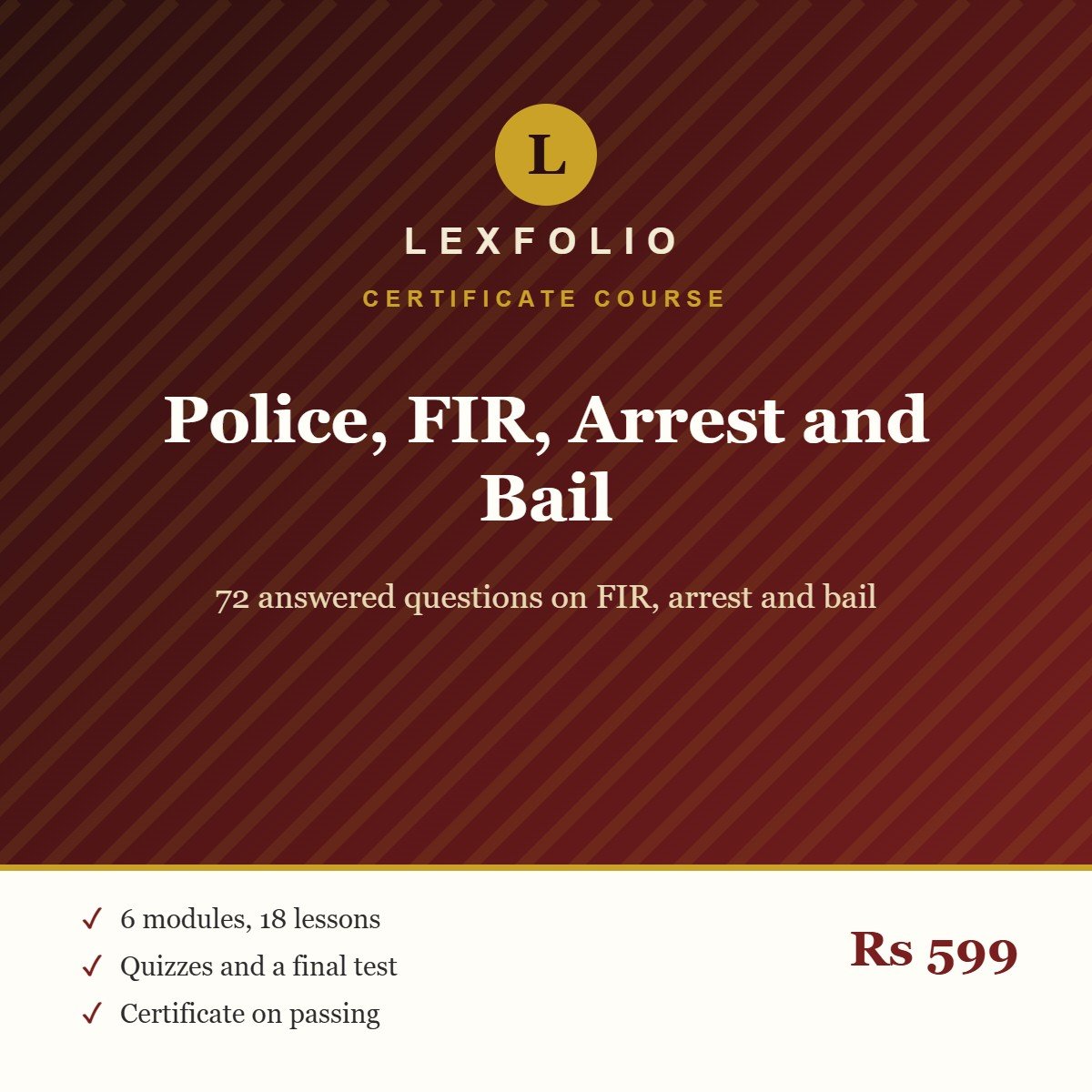
It is a question and answer pack of 72 answered questions, written in the words people actually use. Each answer opens with a short answer you can act on, then sets out the law with its section, how the thing works in practice, which forum to approach, what it costs, a realistic timeline, and the mistake people commonly make. Every answer ends with a short list of steps to take. The criminal law is stated under the Bharatiya Nyaya Sanhita, 2023, the Bharatiya Nagarik Suraksha Sanhita, 2023 and the Bharatiya Sakshya Adhiniyam, 2023, which have applied since 1 July 2024, with the old Indian Penal Code and Code of Criminal Procedure numbers given in brackets where that helps.
The six modules follow the journey from start to finish. Module 1 covers getting the police to act: registration, zero FIR, the complaint to the Superintendent of Police, the application to the Magistrate, online complaints and non cognizable cases. Module 2 covers the notice to appear and the rights that attach at the moment of arrest, including handcuffing, women and night arrest, and children. Module 3 covers custody, remand, police custody against judicial custody, default bail and the undertrial release provision. Module 4 covers bail in bailable and non bailable offences, anticipatory bail, conditions, sureties and cancellation. Module 5 covers the charge sheet, supply of documents, framing of charges, closure reports, protest petitions, quashing, compounding and settlement. Module 6 covers the practical problems: false FIRs, recovering a seized phone or vehicle, the case diary and station diary, and finding out what stage a case has reached.
Format: 6 modules, 18 lessons, 72 answered questions, 6 module quizzes and a 30 question final test. The quizzes and the final test are scenario based, so each one gives a short fact situation and asks what the person should do or what the law provides. Pass mark 60%, with 3 attempts. A certificate is issued on passing and is verifiable at lexfolio.in/verify-certificate/. You get lifetime access to the pack and to its updates.
This pack is information, written so that you can understand your own position and ask better questions. It is not a substitute for a criminal lawyer in a live matter. If an arrest, a remand, a bail application or a charge is actually in front of you, engage an advocate.
What you will learn
- How to get an FIR registered, and the exact steps when a police station refuses or delays
- When the police may arrest at all, and what a notice to appear under section 35(3) BNSS really means
- Your rights at the moment of arrest: grounds, intimation to family, medical examination and access to a lawyer
- How remand works, the difference between police and judicial custody, and how to claim default bail in time
- How to apply for bail in bailable and non bailable offences, and how anticipatory bail is obtained
- What bail conditions and sureties involve, and what happens if a condition is broken
- How a case ends: discharge, quashing, compounding, plea bargaining and withdrawal from prosecution
- How to recover a seized phone or vehicle and how to find out what stage your case is at
Who this course is for
- Anyone who has been named in an FIR, or has received a police notice, and wants to understand the position
- Complainants whose FIR the police will not register, or whose case has stopped moving
- Families of an arrested person who need to know what to do in the first forty eight hours
- Law students and young advocates building a working grasp of the BNSS in practice
- Journalists, social workers and paralegals who field these questions from the public
Lexfolio is an independent education platform and is not affiliated with any court, government department or regulator. This course is general legal information, not legal advice.
Course Content
Getting the police to act: FIR, zero FIR and refusals
Getting the FIR registered
When the station refuses or delays
Online complaints, e-FIR and non cognizable cases
Module 1 quiz: FIR and refusals
Notice, arrest and your rights at the time of arrest
Custody, remand and default bail
Bail: bailable, non bailable, anticipatory and conditions
After the investigation: charge sheet, closure and ending the case
Practical problems: false cases, seized property and case records
Final Assessment and Certificate
Student Ratings & Reviews

No Review Yet