About Course
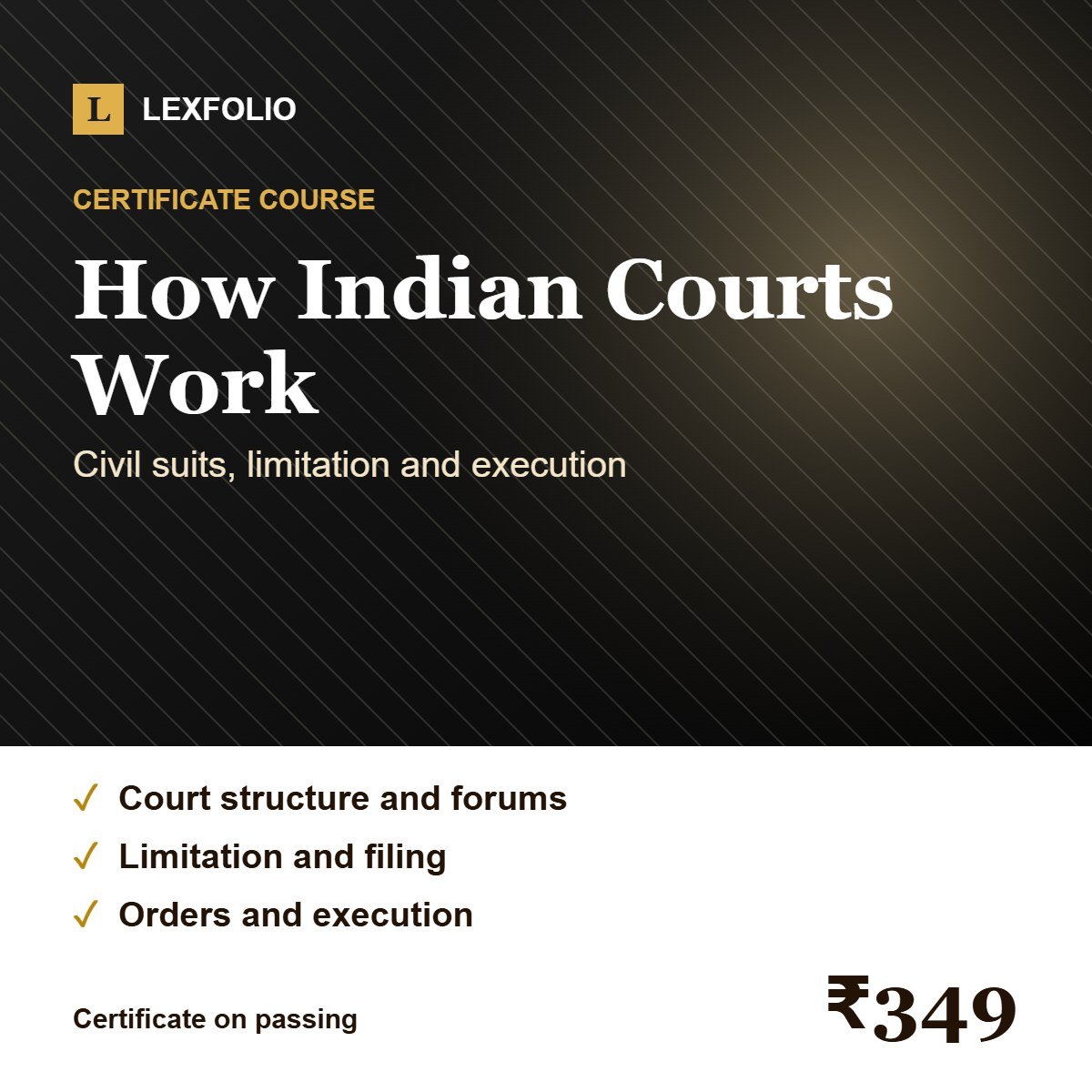
A civil dispute over money, property or a contract can feel like a maze. This course gives you the map. It explains how India’s civil courts are arranged, how a suit under the Code of Civil Procedure begins and proceeds, and how a decree is finally turned into money or possession.
Over six modules and 18 lessons, you learn how jurisdiction decides where to file, what goes into a plaint and a written statement, how court fees and summons work, and how evidence and injunctions are handled. A full module on limitation shows how time can end a claim and how it can sometimes be extended or restarted.
You also learn about pre-institution mediation in commercial disputes, mediation and Lok Adalats more generally, e-filing and eCourts services, tracking a case by its CNR number, getting certified copies, appeals, review, costs and execution. Examples use Indian names and amounts in rupees, and rules that differ by state are flagged as such.
The course is written for ordinary readers, not lawyers. It does not repeat the separate procedures for consumer, family or criminal cases. It is general education and does not replace advice from an advocate on your own matter.
Each module ends with a short quiz, and a final assessment of 30 questions closes the course. Passing the final assessment with 60 percent or more issues a certificate of completion from Lexfolio, which carries a verification link anyone can check. You get 3 attempts and lifetime access. It is not a government or university qualification and is not a licence to practise.
Course Content
Module 1: The Court System and Your Starting Point
The court ladder: who sits where in India’s civil courts
Jurisdiction: choosing the right court
Before you sue: advocates, notices and getting your case ready
Module 1 quiz
Module 2: Starting a Civil Suit
Module 3: How a Suit Proceeds
Module 4: Limitation
Module 5: Mediation, e-Filing and Tracking Your Case
Module 6: Judgment, Appeals and Execution
Final Assessment and Certificate
Student Ratings & Reviews

No Review Yet