About Course
Most disputes between a student and an educational institution are not decided by argument. They are decided by paperwork, by a written complaint sent to the right person, and by a rule that one side has read and the other has not. This course teaches you the rules that govern admission, fees, examinations, discipline, ragging and degrees in India, and shows you how to use them.
The course is written for students, parents and college staff, not for lawyers. Every legal term is explained the first time it appears. Every module works through realistic situations with Indian names and rupee amounts: a seat cancelled in July and a refund demanded in August, a college that keeps a mark sheet until the last instalment is paid, a result withheld for shortage of attendance, a first year student put through a week of so called introduction in a hostel, a degree from a programme that turns out never to have been approved for distance mode.
You will learn where your institution sits in the regulatory map, which body it answers to, and what that body has actually ordered on fee refunds and on the retention of original certificates. You will learn how the Student Grievance Redressal Committee and the ombudsperson work under the University Grants Commission regulations of 2023, how an anti ragging committee is supposed to function, how an Internal Committee under the law on sexual harassment at the workplace conducts an inquiry, and when a consumer complaint, a Right to Information application or a writ petition in the High Court is the realistic route.
The course does not promise that every grievance can be won. A large part of it is spent on judging which complaints are strong, which are weak, and how long each route takes in practice. That judgement is the skill worth having.
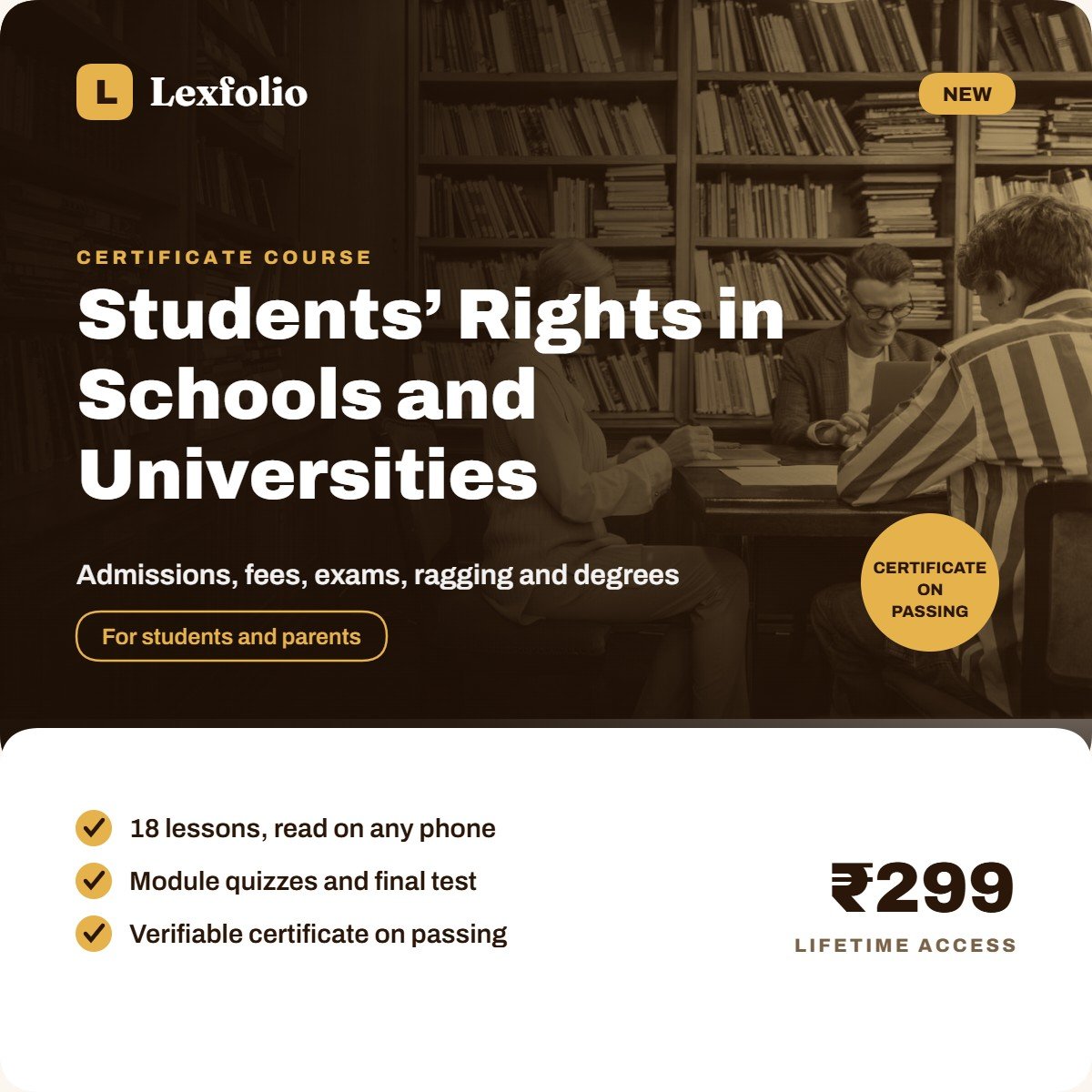
There are six modules, eighteen lessons, a short quiz after each module and a final assessment of thirty questions. The pass mark is sixty per cent and you get three attempts. Passing issues a certificate of completion from Lexfolio with a verification link that anyone can check. It is a certificate of completion, not a university qualification and not a licence to practise law. Access to the material is for life, so you can return to it when a real dispute arises.
Course Content
Module 1: The Right to Education and the Law of Institutions
Article 21A and the Right of Children to Free and Compulsory Education Act 2009
The 25 per cent quota in private schools, and minority institutions
Boards, universities, deemed universities, autonomous colleges and the regulators
Module 1 quiz
Module 2: Admission
Module 3: Fees and Money
Module 4: Examinations and Results
Module 5: Ragging, Harassment and Discipline
Module 6: Degrees, Recognition and Remedies
Final Assessment and Certificate
Student Ratings & Reviews

No Review Yet